For prospective researchers

What would you build ...
if your math could change lives?

Most of the systems holding up other people's lives still run on rules of thumb. The math and algorithms to do better already exist, and so do the researchers who could build out these methods. If you've been looking for where that work happens, you've found the place.

Start the conversation
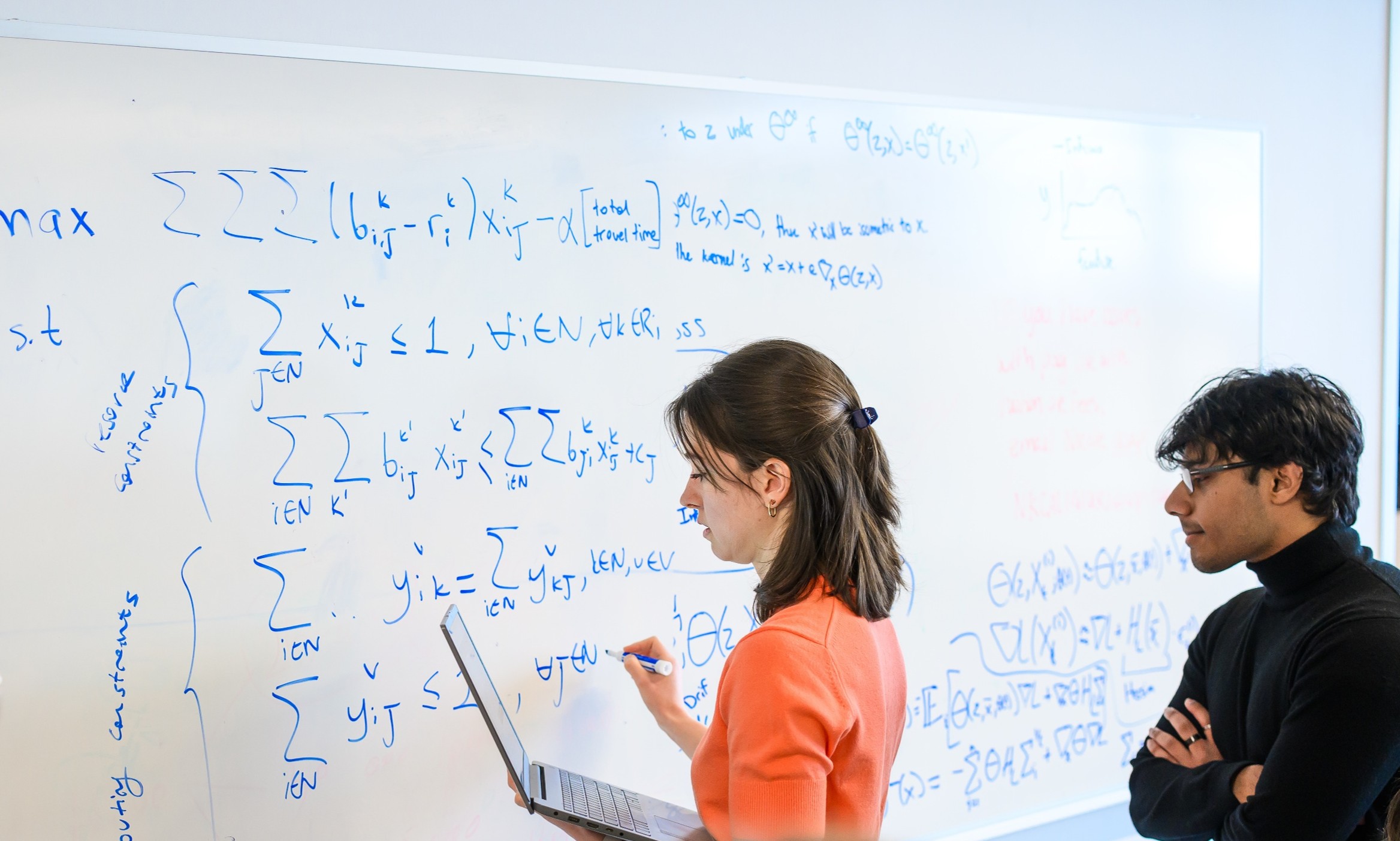
Özge and Arjun developing models at the whiteboard
Özge and Arjun developing models at the whiteboard
The fit

The researcher who thrives here

I'm deliberate about the researchers I take on. What follows is a portrait, not a checklist. If it mostly sounds like you, please reach out.

I

The mathematics you love

You're at ease with discrete math, linear algebra, and probability. Integer programming, nonlinear optimization, and stochastic programming are familiar territory, or you're ready to build that depth.

Ask yourself: when an idea is expressed mathematically, are you more inclined to lean in or to look the other way?
II

The ambiguity you welcome

The problems we work on rarely come well-posed. They arrive as messy human realities – a refugee placement, a foster care routing, a nonprofit resource exchange – and you translate them into mathematical models that hold their own.

III

The agency you earn

I don't assign problem sets, but rather problem spaces and trust you to explore them thoroughly. You're the kind of researcher who, given a piece of territory, takes ownership, working through your own questions before bringing back ones that need a second voice.

Ask yourself: when did you last lead a project that nobody handed you?
IV

The reason it matters to you

Industry uses optimization to maximize quarterly returns. The same math, answering questions that restore dignity and agency, can change real outcomes for people with less leverage over the systems that shape everyday life. If that distinction matters to you, this initiative is likely a strong fit.

The work

Where the math actually goes

Most of the math I do lives in places where allocation decisions can really affect those downstream. Refugee resettlement. Child welfare operations. The operational backbone of organizations responding to human trafficking and to homelessness. These aren't side projects with academic curiosity attached: they're public-sector systems where the math, done right, changes outcomes for people the system tends to overlook.

Methodologically: integer and stochastic optimization, matching and mechanism design, hybrid predictive-plus-prescriptive methods. Practically: every model has a partner organization on the other end. Many papers become systems others use.

We work in human service systems, in areas where people have less voice and choice.

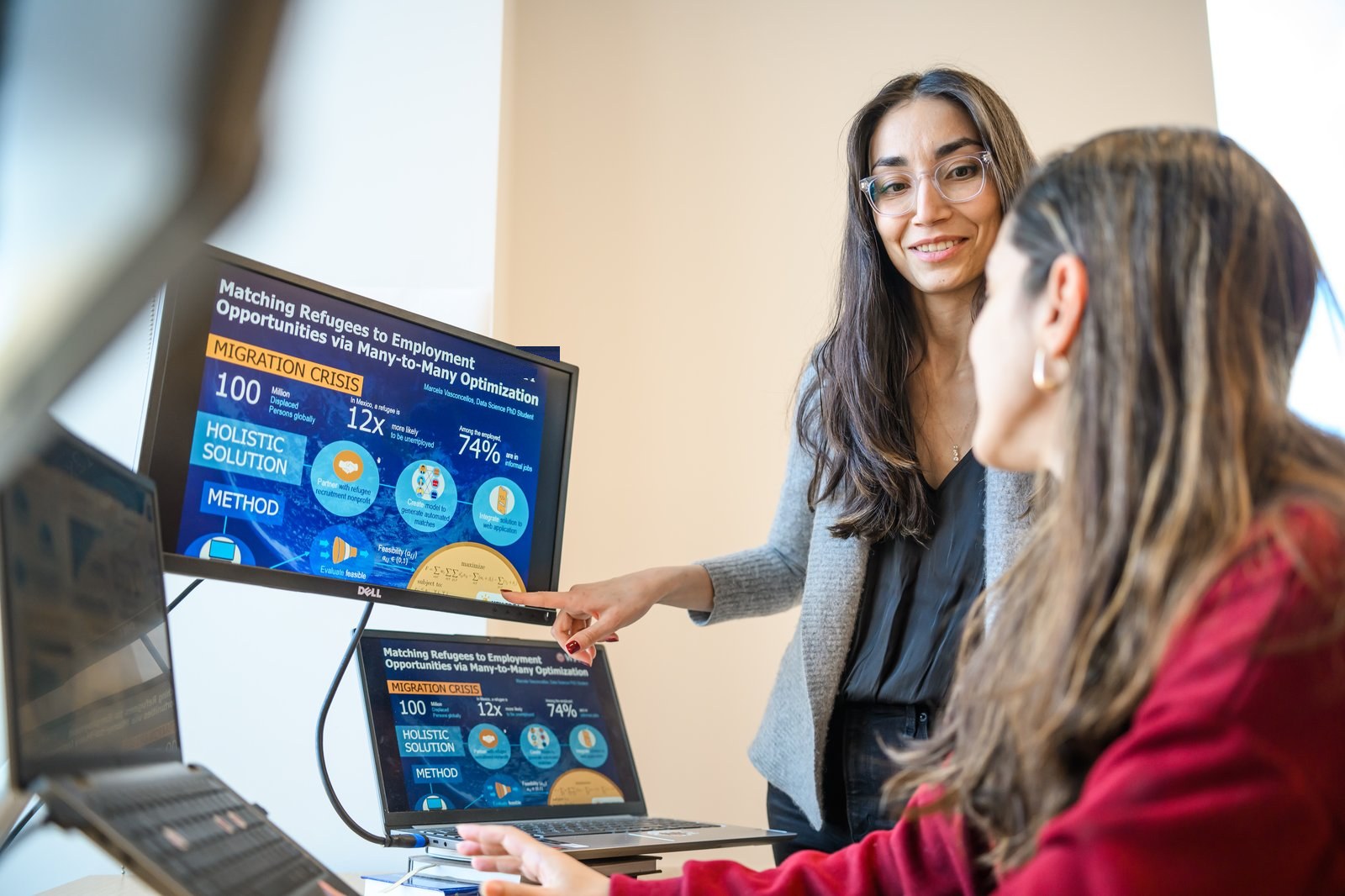
Researchers reviewing a refugee-to-employment matching dashboard

Refugee-to-employment matching in practice

The experience

What working together looks like

Depth over throughput: I'm selective, and the lab is growing.
Here's what working together looks like.

How we'd work together

Small groups and regular one-on-ones. I aim to know what each researcher needs and to make expectations and feedback clear. We celebrate wins as a team: defenses, conference talks, the first time an organization puts into action something we built.

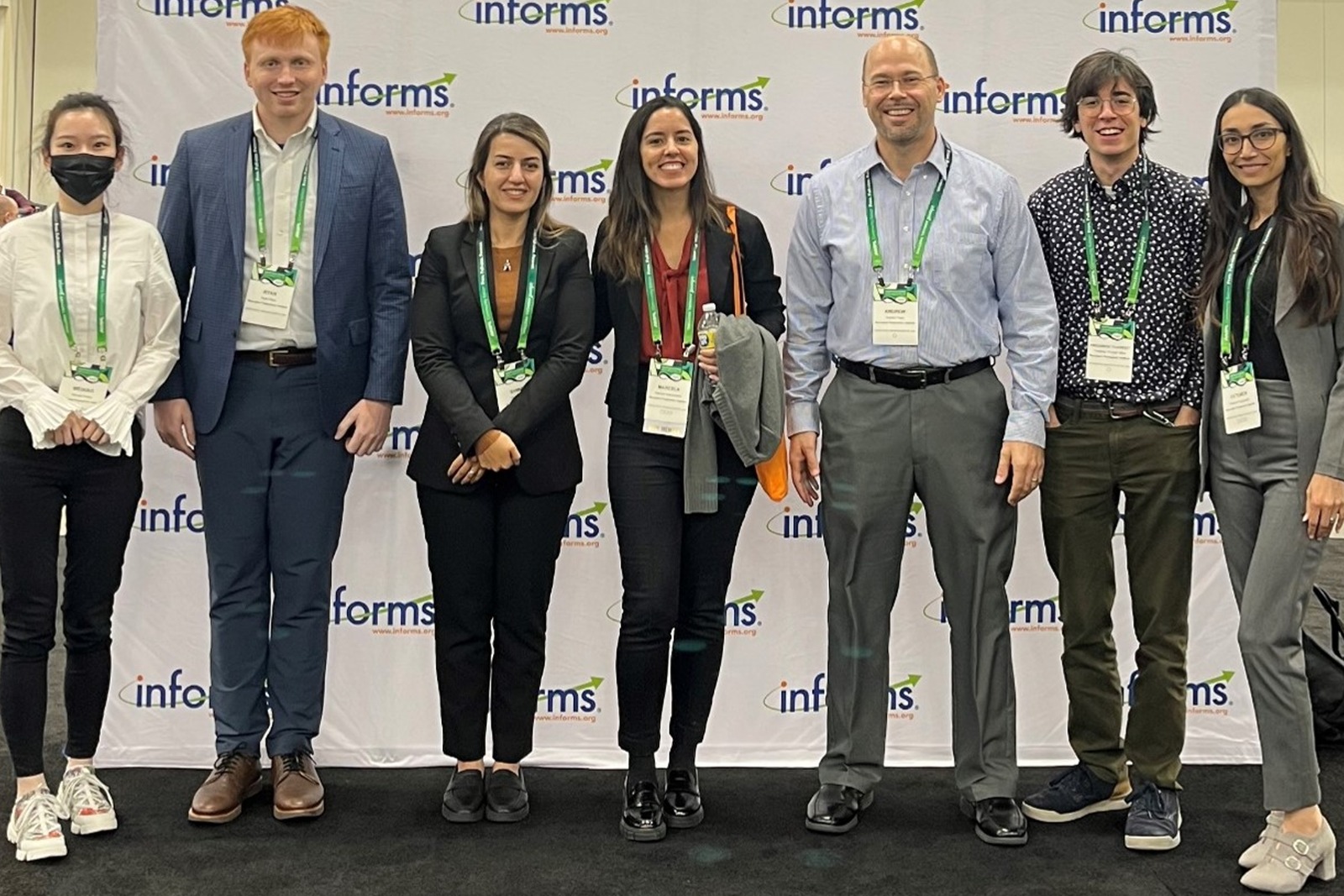
The research team together at an INFORMS Annual Meeting

ARCHES at the INFORMS Annual Meeting

Trusted with your own direction, in time

You'll have ownership over a research direction, not a problem set. The boundaries are something we construct together, in conversation, and their definition is earned as trust builds. What you do inside the boundaries is up to you.

Where this leads

Academia for some members: postdoc and faculty roles. Industry for others: places like Meta, Bank of America, Dell, and MariaDB. Other students graduate to new academic positions at places like Cornell, Georgia Tech, and Southern California. Some take their own routes. What stays consistent is the depth of training: years later, the work it enabled continues.

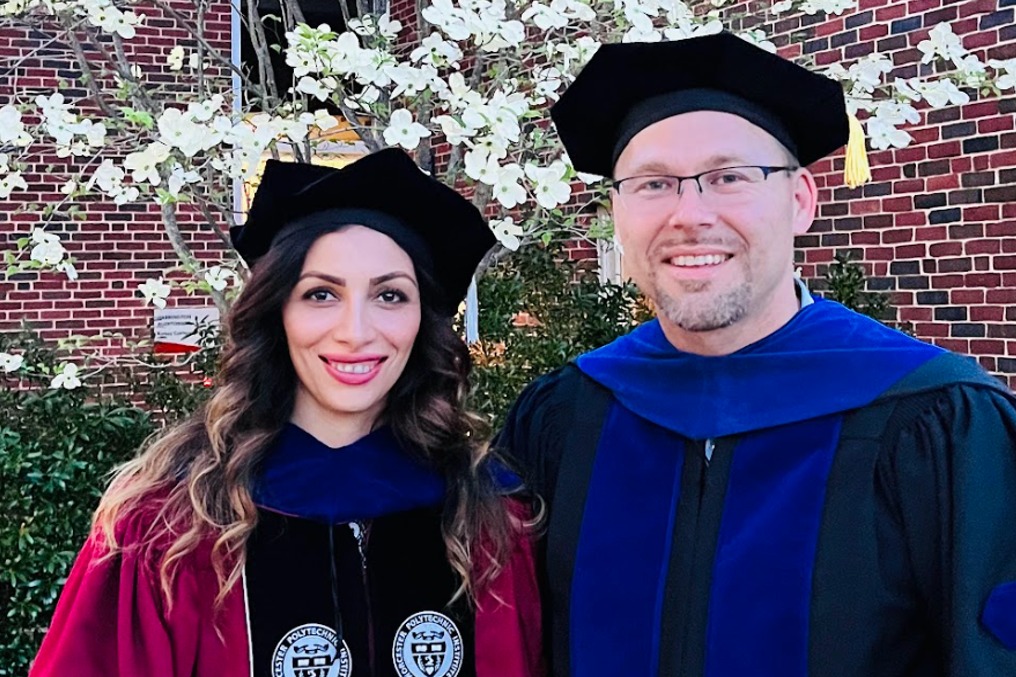
Dr. Narges Ahani at her doctoral graduation

Dr. Narges Ahani at her doctoral graduation

If you've read this far

If this sounds like you, let's talk.

Three thoughtful paragraphs from you can tell me more than a polished CV (those are also helpful!). Either way reaches me directly.

or
Practical items of note
Funding
I support graduate students through NSF, federal, and foundation grants. Most join with funding in place.
Visiting scholars
Yes, case-by-case. Reach out with the same kind of details you would as a prospective student.
Timing
Most arrivals happen in fall cycles. Off-cycle inquiries welcome but slower.
Application materials
For doctoral inquiries: a copy of your CV, transcripts, GRE, and TOEFL scores (if applicable).